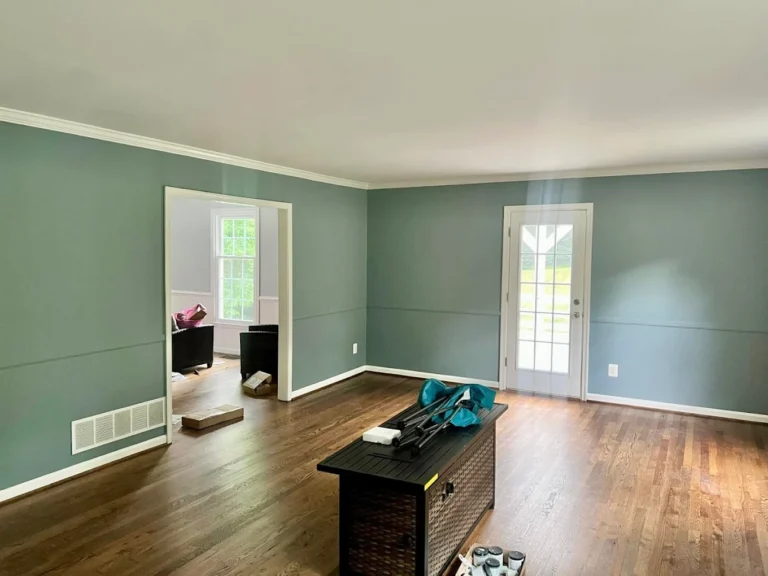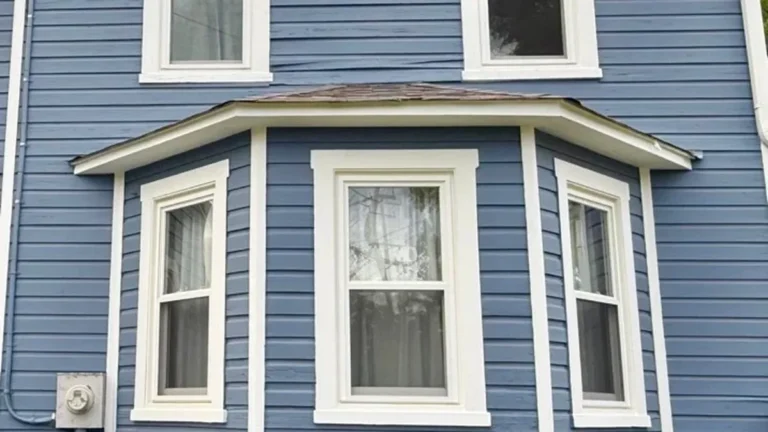
For most rooms, the manufacturer guides point to a low sheen like eggshell or matte on walls, a bit more sheen like satin where hands, scuffs and wiping are part of daily life, semi-gloss on trim, doors and moisture-prone rooms, and flat on ceilings. The right choice for your home depends on three things: how much light the room gets, how smooth the walls are, and how hard the room is used. This guide walks through how to weigh them.
It is written for Maryland homeowners who have picked a color, or are close to it, and now have to choose a finish. Color is a separate decision, and our paint color trends guide covers it. Here the question is how shiny the paint should be, and what that choice does to the look, the cleaning and the way flaws show.
Key Takeaways
- Sheen is how much light a painted surface reflects. Benjamin Moore says lower sheens hide imperfections better, while higher sheens reflect more light and show blemishes more readily.
- Lower sheen is more forgiving on walls, but harder to clean. Benjamin Moore says stains are harder to remove from low-sheen paint, and Sherwin-Williams calls flat more challenging to maintain.
- Higher sheen cleans easier. Sherwin-Williams recommends semi-gloss for kitchens, bathrooms, utility areas and trim, and satin for areas prone to nicks and scuffs.
- Sheen can change how a color looks. Sherwin-Williams says it can slightly alter the perception of color, making it appear lighter or darker depending on the light.
- Names vary by brand and product line. Check the data sheet for the exact product before you commit.
What does paint sheen actually mean?
Sheen describes how much light bounces off the dried paint. According to Benjamin Moore, lower sheens reflect less light and hide imperfections better, while higher sheens reflect more light and show blemishes more readily. That one idea explains most of the advice about which finish goes where.
It also explains why sheen is a trade-off and not a ranking. A flat finish can make a wall with patches or texture look smoother. A semi-gloss finish can make the same wall look worse, because every dent and brush mark catches the light. In return, the shinier surface is easier to wipe clean.
Which sheen is best for walls?
Most guidance lands in the middle. Sherwin-Williams describes flat as completely non-reflective and recommends it for adult bedrooms, formal living rooms, ceilings and uneven or textured walls, with the warning that it scuffs and stains easily and is more challenging to maintain. It describes matte as a flat finish with a slight angular shine, suited to living rooms and dining rooms, smooth and washable, and good at hiding surface imperfections.
Eggshell is the common all-rounder. Benjamin Moore describes it as a low sheen reminiscent of flat or matte, easy to clean and suited to most areas of a home, including family rooms and hallways. Satin sits above it. Benjamin Moore says satin delivers a higher gloss and better stain resistance and durability than lower sheens, including eggshell, and Sherwin-Williams recommends it for hallways, children’s bedrooms and family rooms.
A practical way to think about it: choose the lowest sheen the room can live with. Move up one step where the walls get touched, bumped or cleaned often.
What sheen works in kitchens and bathrooms?
Sherwin-Williams recommends semi-gloss for kitchens, bathrooms and utility areas, noting it is easy to clean. Benjamin Moore describes pearl, a medium gloss, as optimal for walls in high-traffic areas and notes its line offers mildew resistance for high-humidity areas, while also warning that pearl is more susceptible to showing lap marks and other painting flaws.
That last point matters. A shinier wall finish asks more of the person applying it. Smooth walls, careful rolling and good light help. If the walls in your bathroom are rough or patched, discuss with your painter whether a lower sheen is the better compromise, and ask about moisture-resistant products for the room.
What about trim, doors, ceilings and cabinets?
- Ceilings. Both brands point to flat. Benjamin Moore calls it an ideal choice for ceilings and very low-traffic areas, and Sherwin-Williams lists ceilings among flat’s uses.
- Trim and doors. Semi-gloss is the common pick. Benjamin Moore says it highlights architectural details and creates dimension on millwork, trim and doors, and Sherwin-Williams lists trim among its recommended uses.
- Cabinets. Benjamin Moore calls semi-gloss one of the best finishes for kitchen cabinets, and Sherwin-Williams lists cabinets under gloss. Cabinets are a project of their own, and our guide to cabinet painting vs. replacement covers that decision.
- Accent walls and special features. High gloss gives a mirror-like finish, but Benjamin Moore warns it accentuates blemishes and says it is best avoided on areas that are not completely smooth.
How do light and wall condition change the choice?
Light changes how every sheen looks. A room with big windows and strong daylight will show more of the surface than a dim room, and the same finish can look different at noon and at night. Sherwin-Williams also notes that sheen can slightly alter how a color is perceived, making it appear lighter or darker depending on the light.
Wall condition matters just as much. If the walls are textured, patched or uneven, the lower sheens are the forgiving choice. If they are smooth and the room takes a beating, a step up in sheen may be worth it. A good estimator will look at the actual walls instead of choosing from a chart.
How do the sheens compare?
| Sheen | How the manufacturers describe it | Where they suggest it | Trade-off |
|---|---|---|---|
| Flat | Completely non-reflective (Sherwin-Williams); no sheen at all (Benjamin Moore) | Ceilings, adult bedrooms, formal living rooms, uneven walls | Hides flaws, but marks and stains are harder to clean |
| Matte | Flat finish with a slight angular shine; nearly as shine-free as flat | Living rooms, dining rooms, bedrooms | Washable and forgiving, a little less than flat at hiding flaws |
| Eggshell | Low sheen that reflects more light than flat or matte (Benjamin Moore) | Most areas, including family rooms and hallways | Easy to clean while staying soft in appearance |
| Satin | A smoother finish with a higher gloss than eggshell | Hallways, children’s bedrooms, family rooms, woodwork | More stain resistance, shows more surface flaws |
| Pearl | Medium gloss with high durability (Benjamin Moore) | High-traffic walls, trim, humid rooms | More likely to show lap marks and flaws |
| Semi-gloss | A subtle shine; a smooth, luminous finish | Kitchens, bathrooms, trim, doors, cabinets | Easy to clean, shows imperfections |
| Gloss and high gloss | The shiniest and most reflective options | Wood trim, cabinets, doors, furniture | Very durable, but high glare and every blemish shows |
How should you decide?
Work through these questions room by room:
- How much light does the room get? Bright rooms show more surface, so lean lower.
- What is the condition of the walls? Patched, textured or older walls favor flat or matte.
- Who uses the room and how? Children’s rooms, hallways and family rooms may justify satin.
- Is there moisture or grease? Kitchens and bathrooms lean toward satin or semi-gloss, depending on the product.
- What will it be next to? A slightly higher sheen on trim than on walls gives definition. Check that the contrast is what you want.
Then ask your painter to put the choice in writing for each room, along with the product line, because sheen names and the number of options differ between product lines.
What should you ask your painter about sheen?
- Which product line and exact sheen are you recommending for each room, and why?
- Can I see a sample on my own wall in my own light?
- How will you prepare the walls so the sheen looks even?
- Will the trim, doors and ceilings be a different sheen from the walls?
- How do touch-ups work on this finish?
Our interior painting process guide explains how prep, priming and coats fit together, and our cost guide covers what changes the price of a project.
Frequently Asked Questions
Is eggshell or satin better for walls?
Both suit family rooms and hallways. Eggshell is lower sheen and easier on imperfections. Benjamin Moore says satin offers better stain resistance and durability than lower sheens, including eggshell, so it can make sense where walls get touched or wiped often.
What sheen hides wall imperfections best?
Lower sheens. Benjamin Moore says lower sheens hide imperfections better, and Sherwin-Williams lists flat and matte as good at hiding surface imperfections.
Can I use flat paint in a kitchen or bathroom?
Manufacturers generally steer you to higher sheens there. Sherwin-Williams recommends semi-gloss for kitchens, bathrooms and utility areas, and Benjamin Moore notes stains are harder to remove from low-sheen paint. Specialty products exist for humid rooms, so ask what is available for yours.
What sheen should ceilings be?
Flat is the usual choice. Both Sherwin-Williams and Benjamin Moore point to flat for ceilings.
Ready to choose a finish for your rooms?
The most useful next step is an on-site look at your walls and your light. Request a free estimate or call us at (410) 657-2468, and we will walk through the products and sheens that fit each room. You can also read about our interior painting services.